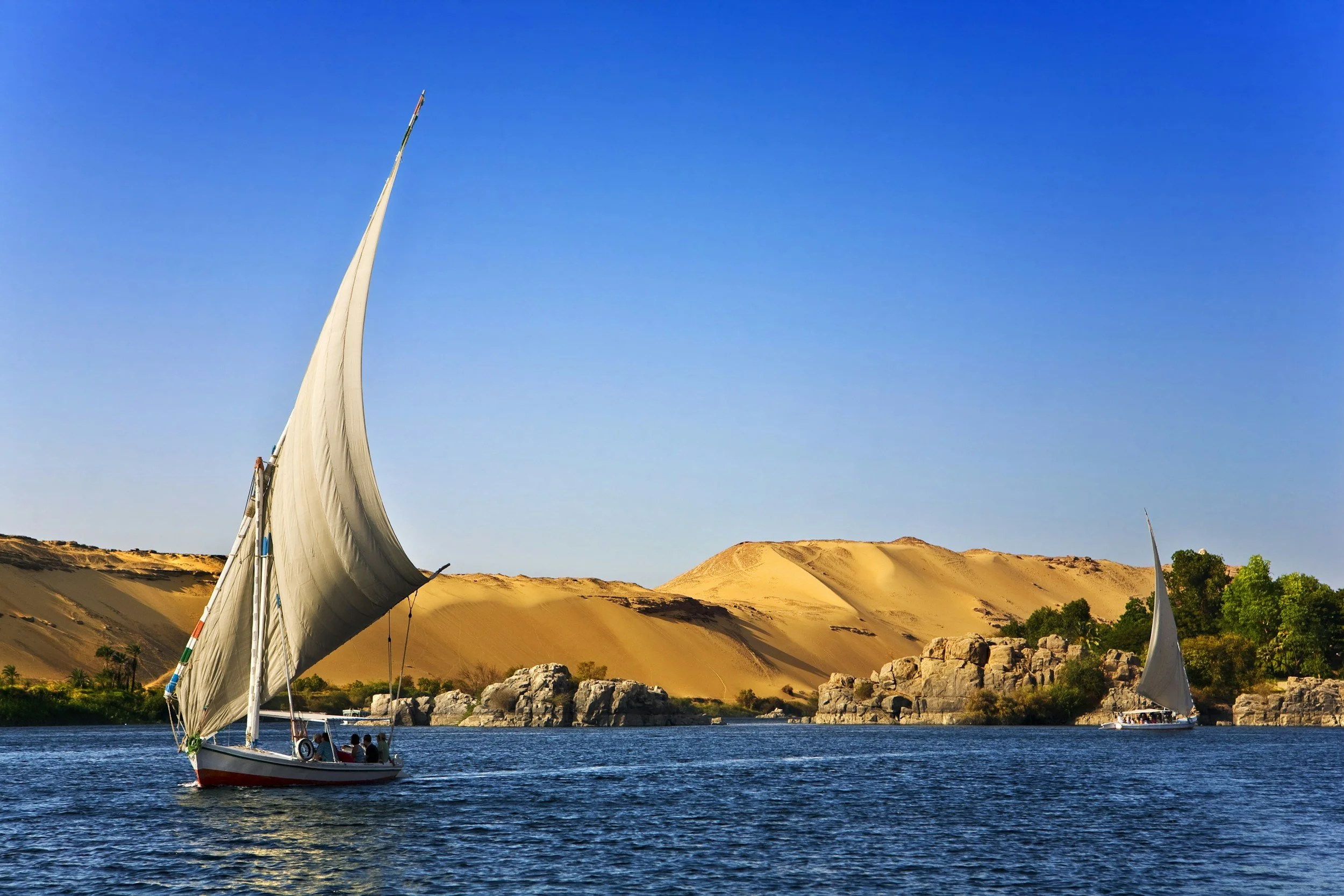
The Nile River, stretching more than 4,000 miles, is often cited as the longest river in the world and has been a vital lifeline for northeastern Africa for millennia. It flows northward from its principal tributaries—the White Nile, originating near Lake Victoria, and the Blue Nile, which begins at Lake Tana—converging near Khartoum in Sudan before continuing through Egypt to the Mediterranean Sea. Its path traverses diverse landscapes, from tropical highlands and swamps to arid desert, shaping ecosystems and human settlements along its course.
Throughout history, the Nile’s annual cycles of flood and recession deposited nutrient-rich silt on the surrounding floodplains, enabling the development of ancient Egyptian civilization. Agriculture, trade, and urban centers concentrated along its banks because the river provided irrigation, transportation, and a reliable freshwater source in an otherwise dry region. Many of the iconic monuments and cities of antiquity, including the pyramids near Giza and temples along the Nile Valley, owe their locations and prosperity to this river’s predictable bounty.
In modern times, the Nile continues to be central to the economies and societies of the countries it touches, including Uganda, South Sudan, Sudan, and Egypt. Large dams—most notably the Aswan High Dam in Egypt and the Grand Ethiopian Renaissance Dam—have transformed water management by providing hydroelectric power, flood control, and improved irrigation. These projects have also prompted regional discussions and negotiations over water rights, reservoir management, and downstream impacts, highlighting the river’s geopolitical significance.
Ecologically, the Nile supports a variety of habitats and species, from freshwater fish and birds to riparian plant communities that sustain local livelihoods. However, the river faces environmental pressures such as pollution, invasive species, over-extraction, and climate change-driven variability in rainfall and glacier melt in its headwaters. Sustainable management and cooperative international governance will be crucial to balancing human needs, conserving biodiversity, and ensuring the Nile remains a life-sustaining resource for future generations.