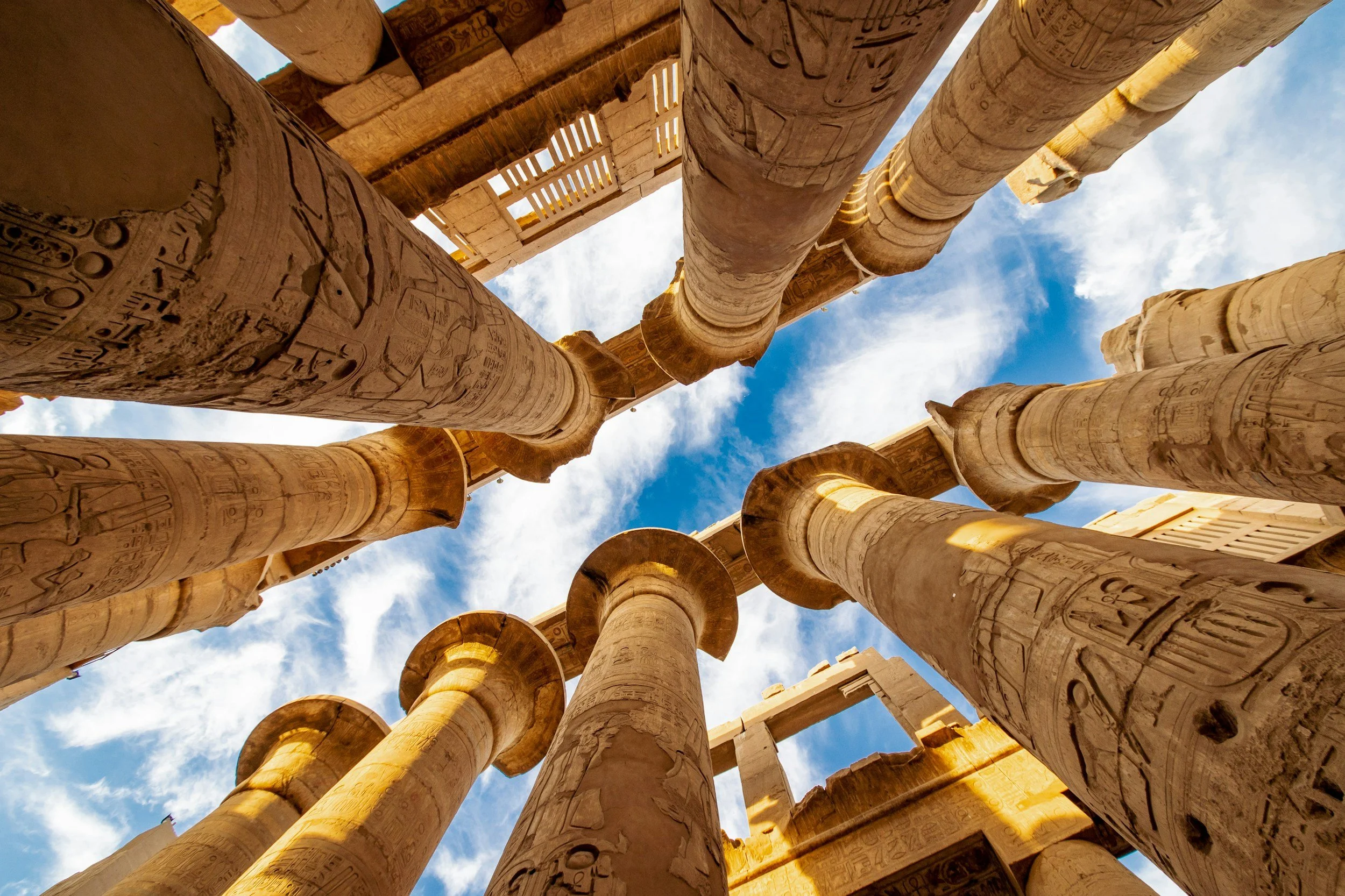
The Temple of Ra, rising on a sun-baked plateau, was conceived as a dazzling axis between earth and sky where the sovereign light of the sun god revealed order, power, and renewal. Massive sandstone pylons and colonnaded courts framed the approach, their surfaces catching dawn’s first fingers of light and guiding them inward toward sanctuaries lined with gold leaf and painted reliefs. These images—Ra’s solar barque, priestly rites, and scenes of the pharaoh as the god’s earthly steward—announced a cosmos governed by visible hierarchy and sacred purpose, their colors and iconography speaking to both the everyday observer and the initiated alike, transmitting stories and meanings across generations.
As morning progressed, the temple’s architecture became an instrument of worship: carefully oriented openings and axial corridors channeled the sun’s rays into inner chambers, illuminating cult statues and altars in brief, ritualized moments. Those inner sanctums preserved a reverent hush, where offerings were placed and hymns intoned to renew the balance of the cosmos; priests moved with measured gestures, sustaining a continuity between divine will and human duty, each action timed to celestial cycles and long-standing liturgical tradition and observed with meticulous discipline.
Beyond the hush of the inner rooms, broad open courtyards hosted the more public dimensions of temple life. Seasonal festivals and daily ceremonies transformed these spaces into a living stage of state religion and political display, where the pharaoh’s presence and ritual acts reinforced both sacred authority and civic cohesion. Markets, processions, and the gathering of common folk animated these courts, turning stone and shadow into a communal theater. In this way, the Temple of Ra functioned not only as a house of worship but as a central theater for communal devotion and the performance of power, binding citizens to a shared narrative of cosmic order and royal legitimacy.